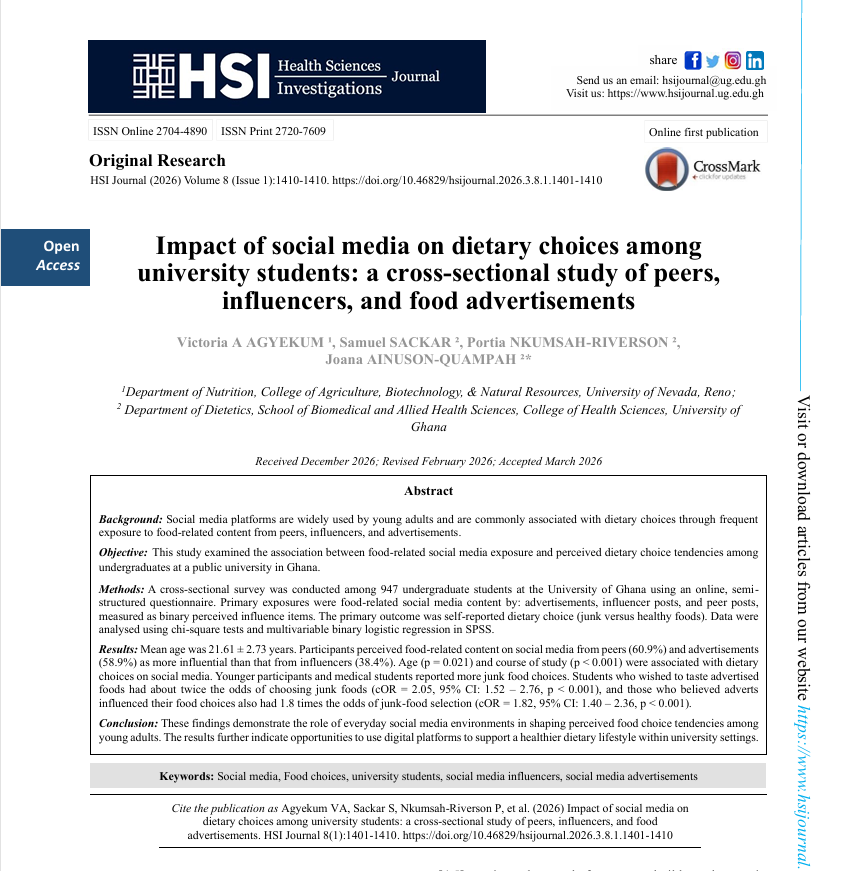
Impact of Social Media Use on the Dietary Choices of University of Ghana (Korle-Bu Campus) Undergraduate Students
Impact of Social Media on Dietary Choices of Ghanaian Undergraduates
Abstract
Abstract
Introduction: Social media platforms significantly affect the lives of individuals and may shape dietary choices through the frequent exposure to food by peer influencers and adverts. This study aimed to assess the impact of social media use on dietary choices of undergraduates in a public university in Ghana.
Methodology: A cross-sectional study design was used to obtain data from 947 undergraduates at the University of Ghana, Korle-Bu campus. Data on impact of social media use on dietary choices were obtained from modified validated, semi-structured questionnaire administered online. Data generated was analyzed using SPSS and summarized using frequencies, percentages, means and standard deviations. Pearson’s chi-square was used to assess the association between variables. P-value <0.05.
Results: The dietary choices of more than half (58.8%) of the students were influenced by course of study (p = 0.000). social media food advertisements. Social media Influencers and peers influenced the food choices of 38.3% and 60.9% of the students respectively. There was a significant association between dietary choices due to social media influence and age group (p = 0.021) as well as
Conclusion: The study found that social media has a significant impact on the dietary choices of participants. Key stakeholders, including University Authorities and Health Professionals should leverage on social media as a potent tool for disseminating accurate nutrition information to promote healthy dietary choices and eating habits among young adults. Efforts should also be made to raise awareness about the misuse of social media by fraudulent individuals who spread misleading nutritional claims.